New heat transfer tech a cure for manufacturing challenges at Sydney Composites
(SYDNEY, 6 OCTOBER) A new collaborative project backed by the Australian Composites Manufacturing Cooperative Research Centre (ACM CRC) will greatly expand output and lower costs at Sydney Composites, a specialist advanced composites manufacturer that takes projects across a range of industries from design and simulation through to tooling and finished parts. The project will help the company pursue international opportunities, scale its business, and bring a new production technology to Australia.
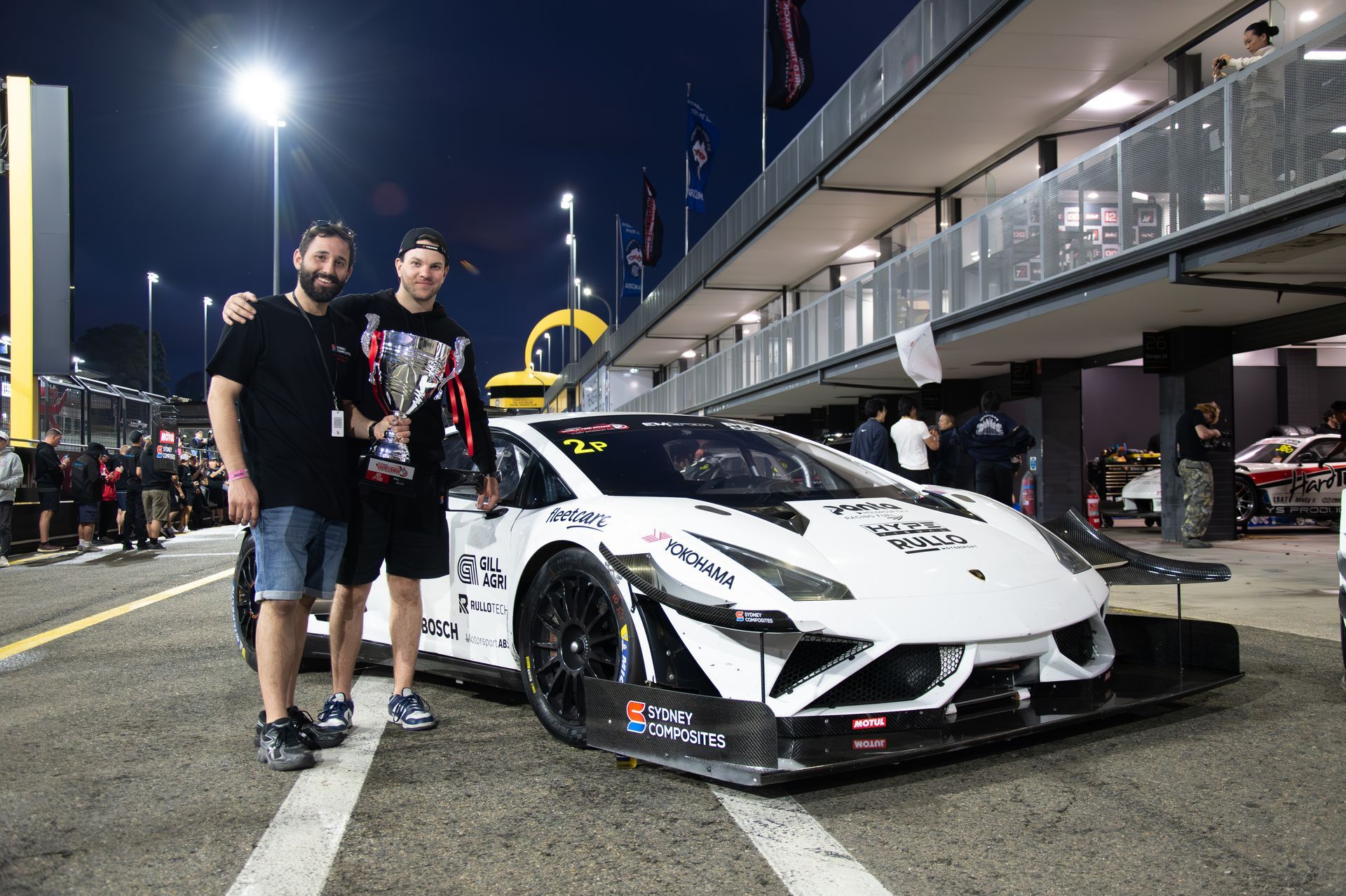
The Wetherill Park manufacturer marks its tenth anniversary in December. Over that decade it has built a reputation for high-performance carbon fibre components, most visibly in elite motorsport such as the World Time Attack Challenge, and has extended that capability into renewable energy, medical and industrial applications.
ACM CRC is backing a project linking Sydney Composites with its long-time collaborator, aerodynamics specialist JKF Consultants, as well as special purpose machinery builder McMillan Engineering Group. This will deliver a new rapid cycle heat transfer moulding process, which could take cycle times from four hours to 10 minutes.
“It’s a manufacturing method combining a few different curing methods,” said Mr Luke Preston, CEO, ACM CRC.
“As well as boosting output at Sydney Composites by somewhere by 400 and 650 per cent, it offers drastic savings in labour and energy costs, as well as the asset depreciation cost per part produced. The commercial potential is huge, and it introduces an important new production capability to Australia.”
Mr Greg Kerba, the company’s CEO, founder and owner, said the new process will address two of the big challenges faced by local composites companies: a shortage of skills for manual layup-based production and the high-cost local environment.
“We haven't found anyone in Australia deploying rapid cycle heat transfer moulding, so that gives us a unique offering,” said Kerba.
“Which is a huge positive for us, because everyone's doing very small batch production, with slow cycle times. There will be ways that we can help other new clients and markets after this project is complete.”
The 12-month project will see theoretical validation followed by implementation and testing of the process, taking it from Technology Readiness Level (TRL) 3 to TRL7.
The first batch of products will be 10 composite aerofoil car mirrors, which will be tested for parameters including mechanical strength versus mirrors made by traditional oven or autoclave curing methods.
Rapid cycle heat transfer moulding will offer vast possibilities for Sydney Composites to serve clients outside of its traditional automotive market, including those in medtech and renewable energy.
“Being a small business, having an idea and trying to push innovation in manufacturing can be a lonely path,” said Kerba.
“We are appreciative of the ACM CRC team backing us and our ambitions to grow,” added Kerba.
“It has been a pleasure working with them and being exposed to their positivity around what manufacturing can achieve. I think that's what we need more of, because if you don't have positivity, you usually can't do anything.”
ACM CRC welcomes engagement from industry and research partners interested in collaborating on advanced composites manufacturing initiatives. Contact us
here.