9 Questions with Rounak Saha Niloy
Our PhDs are playing a significant role within our program, and in the broader industry.
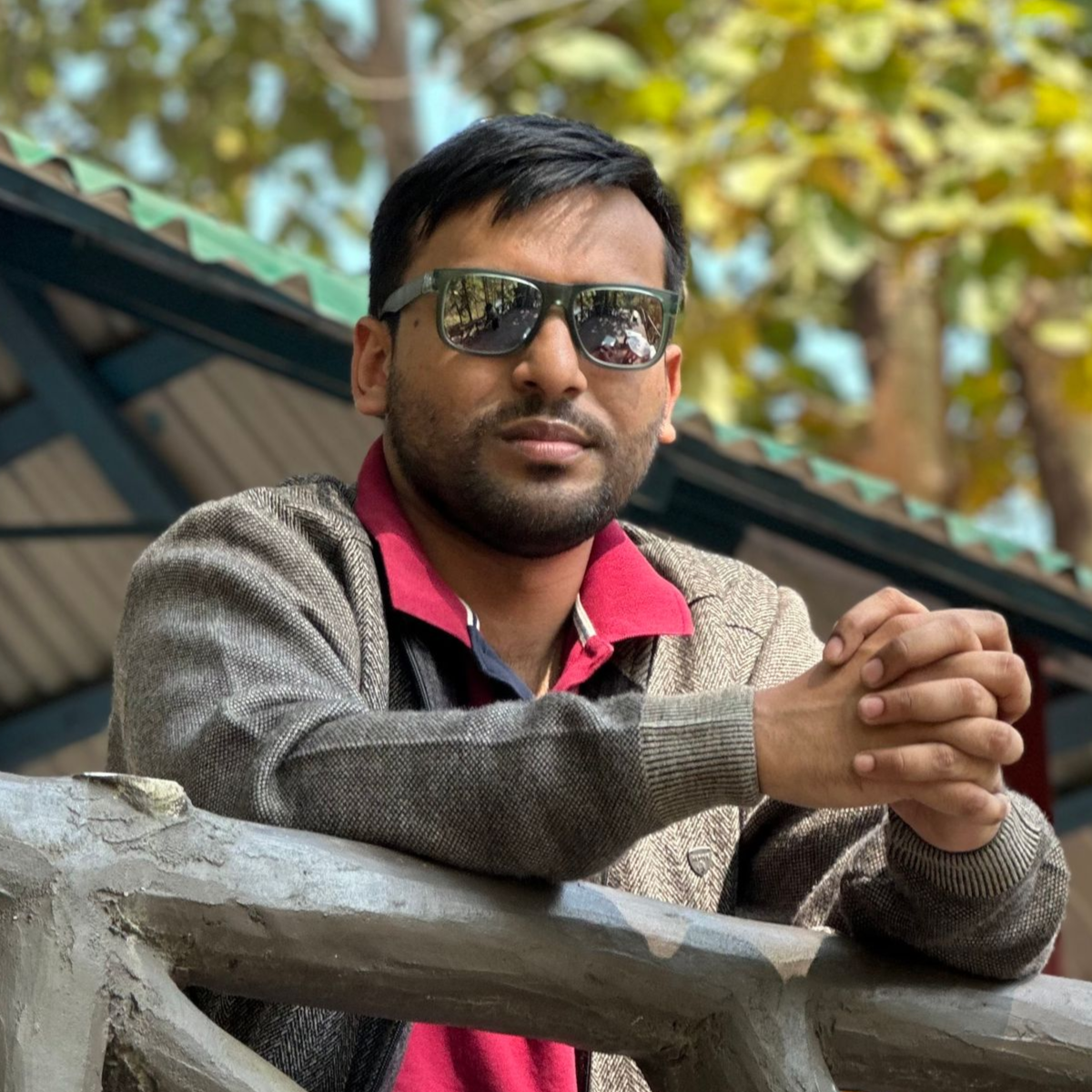
Rounak Saha Niloy is a PhD student at UNSW Sydney, working in collaboration with the ARC Training Centre for Automated Manufacture of Advanced Composites (AMAC). He completed his Master’s by Research in Mechanical Engineering at UNSW Canberra at ADFA, and holds a Bachelor’s degree in Naval Architecture and Marine Engineering from Bangladesh University of Engineering and Technology (BUET).
His research lies at the intersection of computational design, advanced manufacturing, and marine engineering. He focuses on developing optimisation frameworks for composite structures, integrating machine learning, CFD, and evolutionary algorithms to address complex, multi-objective design problems. His work also explores automated fibre placement (AFP) and data-driven manufacturing, aiming to improve both design efficiency and structural performance.
By combining domain expertise with modern computational tools, Rounak aims to bridge the gap between design and manufacturing, enabling more efficient and scalable engineering solutions for high-performance applications.
Q1. Under which ACM CRC Research Program does your PhD project sit?
Research Program 3 – Simulation, Performance Prediction
Q2. What is the focus of your PhD?
My PhD focuses on developing an efficient optimisation framework for process parameter selection in automated fibre placement (AFP) manufacturing. The goal is to systematically improve manufacturing quality and performance by identifying optimal process settings rather than relying on trial-and-error approaches.
To ground this work in a practical application, I use the design and manufacture of a shape-adaptive composite marine propeller as a case study. This provides a realistic and data-rich environment to study how AFP parameters influence structural performance, enabling me to build and validate a robust optimisation tool that can be extended to broader composite manufacturing applications.
Q3. When did you become interested in this field?
I became interested in this field after completing my Master’s. During my postgraduate studies at UNSW Canberra, my work was primarily computational, where I developed a strong foundation in optimisation techniques. However, I was keen to apply these skills to a more practical, engineering-driven problem.
At the same time, my undergraduate background in Naval Architecture motivated me to stay connected to marine applications. This project sits precisely at that intersection. It allows me to apply optimisation methods within a real manufacturing context while working on composite marine propellers, which aligns closely with my original discipline. That combination of computational optimisation and applied naval engineering is what drew me to this field.
Q4. What made you interested in it?
What attracted me to this field is the strong alignment between the problem itself and my technical background. It sits at the intersection of optimisation, advanced manufacturing, and naval architecture, which are the areas I have been building expertise in. More specifically, I was drawn to the challenge of moving beyond purely computational work to something that has direct engineering impact. That combination of methodological depth and practical significance is what made the field particularly compelling to me.
Q5. What do you hope to achieve through your PhD? What challenges are you hoping to solve?
Through my PhD, I aim to develop a robust and generalisable optimisation framework for AFP that can systematically determine optimal process parameters for complex composite structures. The broader goal is to move AFP manufacturing away from heuristic, trial-and-error approaches toward a more data-driven and predictive methodology.
In terms of challenges, there are a few key problems I want to address. First, AFP involves a large number of interdependent process parameters, and their combined effect on structural performance is highly nonlinear and often uncertain. Capturing this relationship accurately is difficult, especially with limited and noisy experimental data. Second, composite manufacturing is inherently heteroscedastic, meaning the variability in outcomes changes across the design space, which makes conventional modelling approaches less effective. Third, there is the practical constraint of limited experimental budgets, so the optimisation strategy needs to be sample-efficient while still achieving reliable global performance.
By tackling these challenges, I hope to produce a framework that not only improves the manufacturing and performance of shape-adaptive composite marine propellers, but can also be extended to other advanced composite manufacturing applications.
Q6. What are your long-term goals/ambitions?
My long-term ambition is to apply my academic expertise to real-world engineering challenges. I aim to bridge the gap between research and industry by translating theory into practical solutions that improve performance and benefit society.
Q7. What’s the best thing about being an ACM CRC PhD student?
The best part of being an ACM CRC PhD student is the collaboration and industry exposure. I get to work with both academic and industry teams, which keeps the research practical. The networking is also valuable, as it helps me connect with people across different areas and learn from them.
Q8. What one piece of advice would you give to people thinking of undertaking a PhD in the composites manufacturing area?
Be clear about why you want to do it and be prepared to work across multiple areas. Composites manufacturing is not just theory. It involves materials, processes, experiments, and data. Things will not always work as planned, so patience and persistence matter. If you can stay adaptable and keep the bigger picture in mind, the experience is very rewarding.
Q.9 Tell us something about you that would surprise/impress people.
One thing that might surprise people is that my work sits across quite different areas. I started in naval architecture, moved into optimisation during my Master’s, and now work on composite manufacturing. Being able to connect these fields and apply them to a real engineering problem is something I take pride in.
Interested to know more?
Visit our Education and Training page to learn more on our HDR Program, and how it’s helping to achieve industry transformation.